Austin Kleon Draw the Art You Want to See
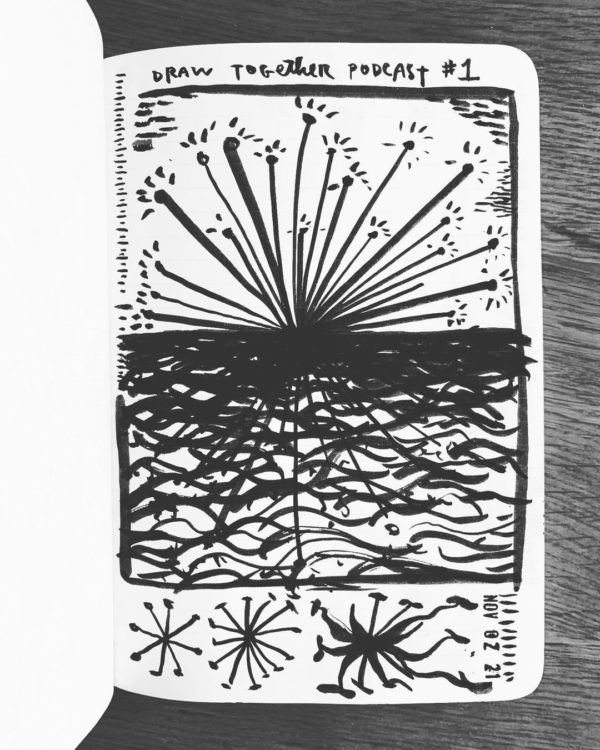
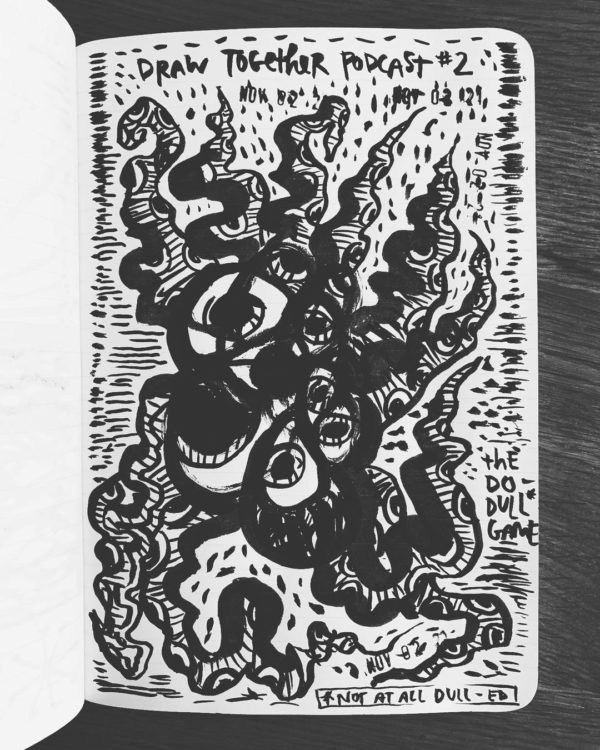
Here are some diary drawings I made while listening to episode one and episode two the new Draw Together podcast from my friend Wendy MacNaughton. In some ways, I notice these sound experiments more soothing and more interesting than the show: there's nothing to look at, so you focus on your own lines, and feel free to diverge… (These were done with my magic brush pen.)
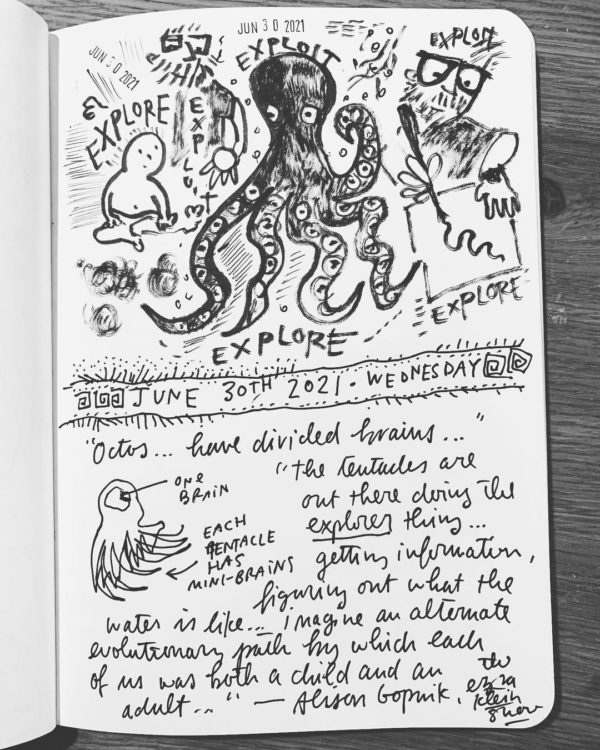
Here are some diary pages I drew while listening to Alison Gopnik talk about her research and her books The Philosophical Baby and The Gardener and the Carpenteron the podcast The Ezra Klein Show. Like Klein, I despise most parenting books, especially the "hey bro" tones of most of those aimed at dads, just Gopnik has non only helped me call up differently about my kids, she'due south helped me think differently nearly my ain creative do.
Gopnik was talking virtually childhood equally evolution'due south solution to explore-exploit tradeoffs and how children and adult are dissimilar kinds of creatures. The kid more often than not explores, the adult mostly exploits. (Children, she says are the R&D departments for the man race.) And then she brought up the octopus. The octopus has a split up kind of brain. There's a big brain in their heads, exploiting, basically, and so there are lots of little brains in their tentacles, exploring.
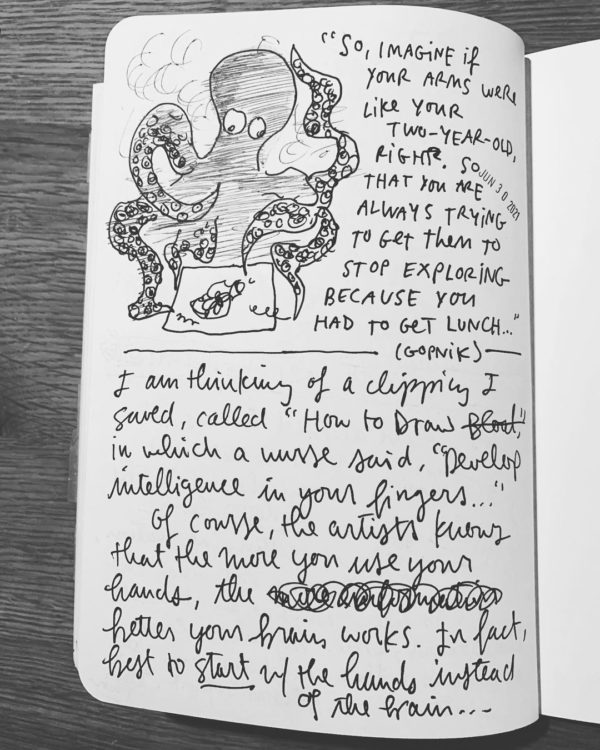
And then, my thought is that we could imagine an alternate evolutionary path by which each of us was both a child and an adult. So imagine if your artillery were like your ii-yr-old, correct? And so that y'all are always trying to get them to terminate exploring because yous had to go lunch. I suspect that may be what the consciousness of an octo is like.
Subsequently she said that, I thought, you've just described an artist.
The octopus has intelligence in its tentacles. When an artist (or a two-year-sometime) is drawing, at that place is intelligence in their fingers. The hand is moving beyond what the brain is telling it to do. The brain is beingness told as much by the fingers as the fingers are being told past the encephalon.
Later in the conversation, Gopnik says, "Going for a walk with a two-year-old is similar going for a walk with William Blake." This was the very advice of the artist Corita Kent: "Borrow a child."
A podcast episode well worth your fourth dimension.
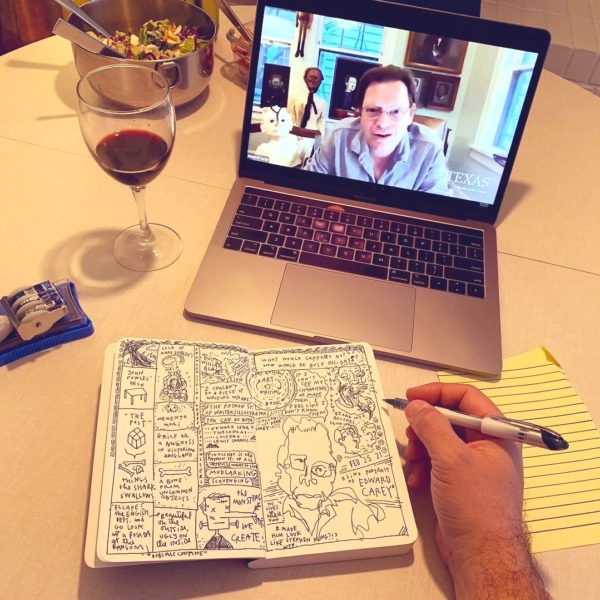
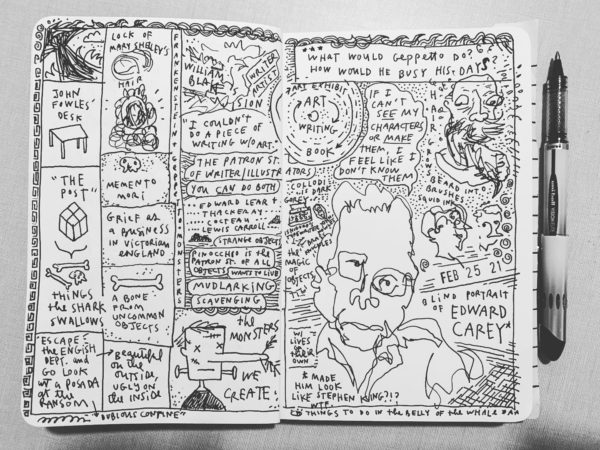
One outcome of the pandemic is that I'm really able to attend author events at the same frequency I did before I had children. Last week I watched Edward Carey discuss writing and drawing his re-telling of Geppetto's time in the belly of the whale, The Swallowed Human being (and one of my favorite reads of last spring), while highlighting treasures from the Bribe Center here in Austin, Texas. (Y'all can watch the whole talk on YouTube.) Here are my notes:
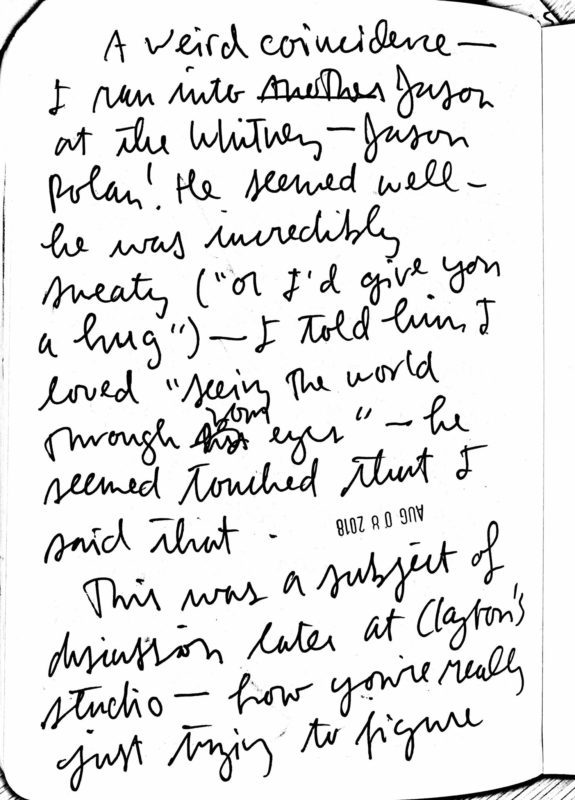
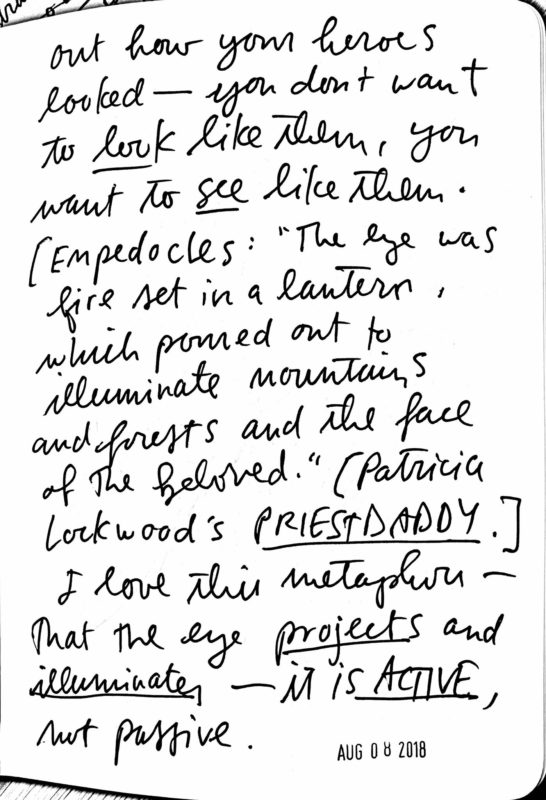
It's been i yr since Jason Polan died. I am re-reading my diary entry from August 8, 2018, the last time I saw him. It is no coincidence that seeing him made me think about seeing — he was i of the great see-ers of our generation, always looking, always seeing.
I have been practicing a lot of Debussy on the piano, and read a letter he wrote to his friend, quoted in Alex Ross'southward The Rest is Noise:
I confess that I am no longer thinking in musical terms, or at least non much, even though I believe with all my heart that Music remains for all time the finest means of expression we accept. Information technology's just that I find the actual pieces — whether they're old or modern, which is whatever case simply a matter of dates — and then totally poverty-stricken, manifesting an inability to see beyond the work-table. They odour of the lamp, not of the sun…. I experience that, without descending to the level of the gossip column or the novel, it should be possible to solve the problem somehow. There's no demand either for music to brand people think! … It would exist plenty if music could make people listen…."
Jason's piece of work smelled of the sunday, and if it ever smelled like a lamp, information technology smelled similar a lamp in Taco Bong: admittedlysucculent.
If you don't know his work, watch this video, narrated past his friend, Fritz Swanson, for the new site past UNIQLO, which features a letter from Jason's mother. Jen Bekman too wrote a remembrance at 20×200.
Then selection up a Uniball Vision Elite Bold and a Strathmore 4×half dozen pad, take a walk, and describe what you see.
And be prissy to people.
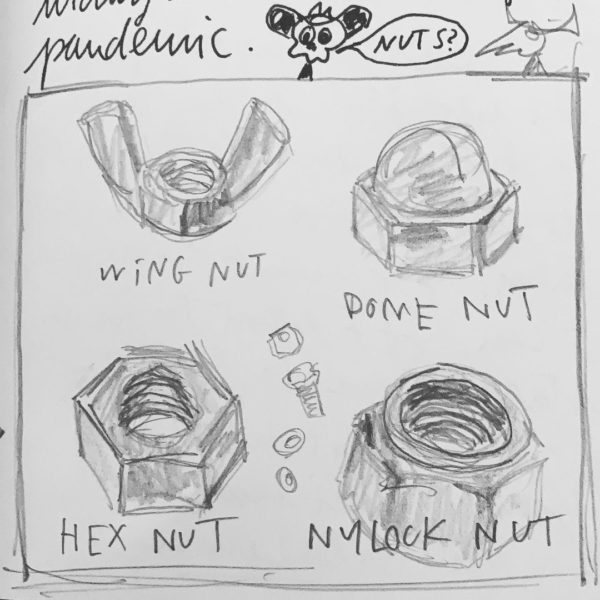
I was putting together a climbing dome for my kids out in the thou a few days ago (it'southward Dec in Texas, you can notwithstanding go a sunburn outside) and there were ii kinds of nuts I had to distinguish between, and I thought, "How many damned kinds of nuts are there, anyways?" Many, it turns out, so I drew a bunch of them in my diary. Now I can name nuts like Harlan Pepper.
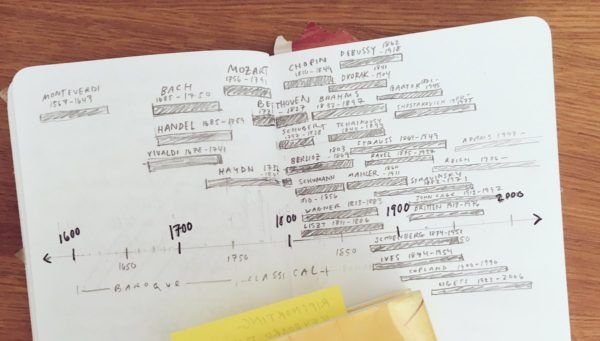
I copied those nuts from a diagram I establish on the internet, much like I copied this timeline of composers a few years agone. It's not enough, for me, to merely print out a diagram and paste it in my diary. I demand to copy it past manus, slowly, to really look at it and let the information sink in. Copying is how I learn, information technology's a way to understand what's really going on, and cartoon is a way of slowing down long enough to really expect at something. (Information technology's like I said inKeep Going: "Slow down and describe things out.")
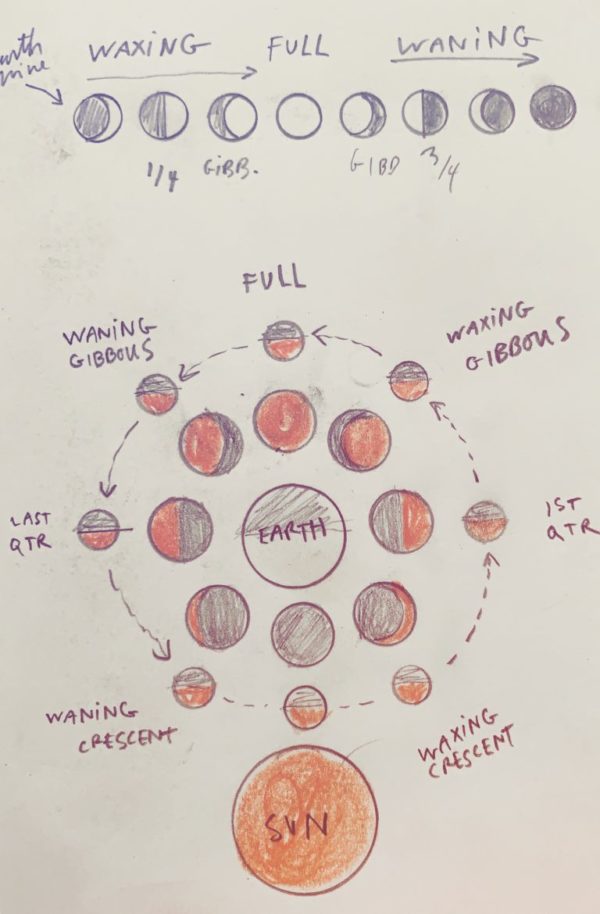
Here's a drawing I fabricated when I was trying to understand the moon phases. I thoughtI had it figured out, until I was playing with the Sundial app on my phone and realized that, duh, when the moon is total, it'due south got the full sunday shining on it from the other side of the globe, so lunar noon, when it'south at its meridian, is at the opposite time of 24-hour interval from solar apex. (I think?) Once again, drawing helped me sympathise:
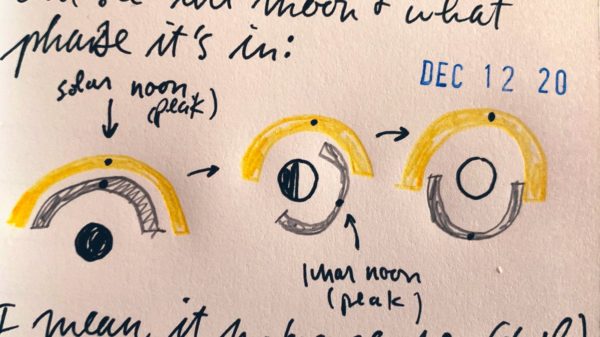
If you depict something, no matter how mundane the subject, no affair how badly, you really await at the affair, and therefore, you remember it better.
If you want to remember something, try drawing information technology.
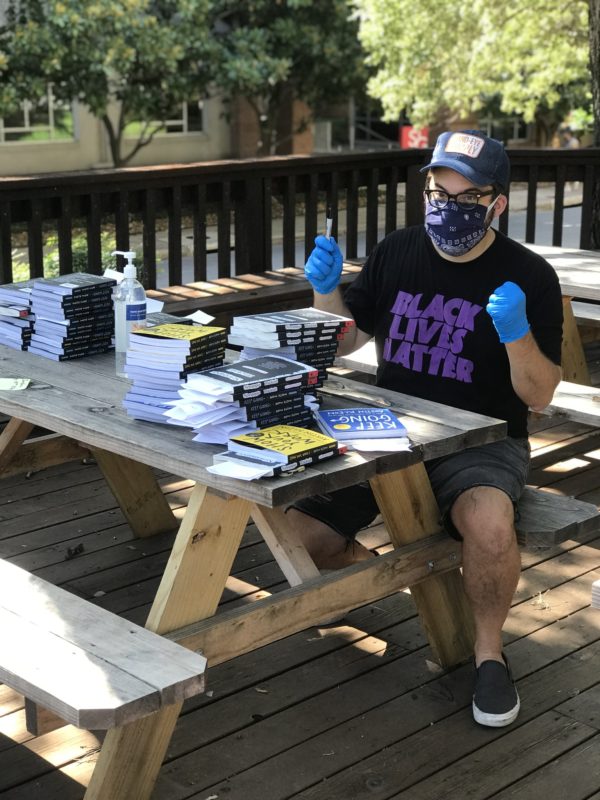
I signed hundreds of copies of my books at Bookpeople in the past few weeks. Because of the pandemic, we sign masked and socially distanced on the picnic tables exterior:
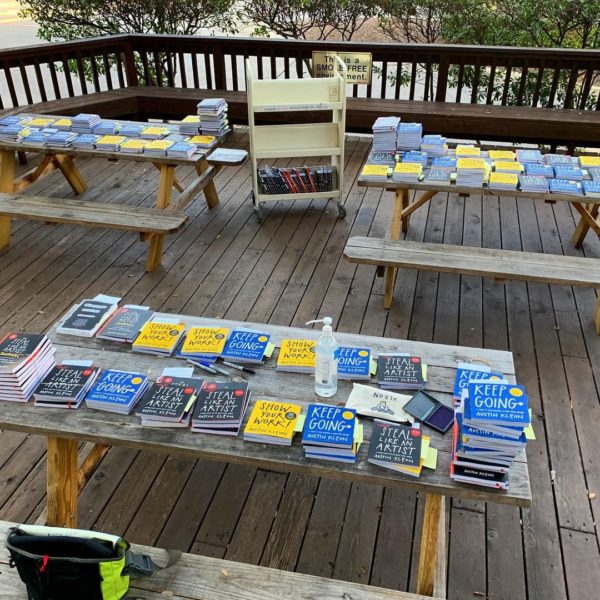
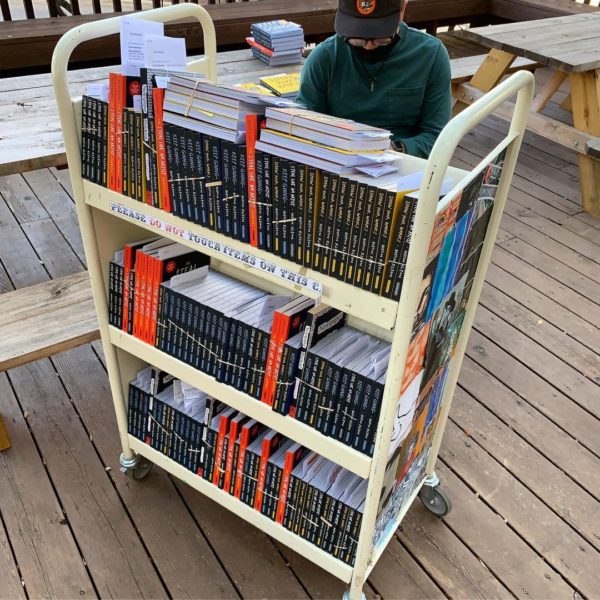
This cart is probably, oh, one/3 of what I signed for the holidays:
Equally you can imagine, I go through a lot of Sharpies. Because I'grand a weirdo, I take a technique to break in new ones, which I demonstrate in this video (also on Instagram):
How to break in a Sharpie pic.twitter.com/1VnHWi3EVL
— Austin Kleon (@austinkleon) Dec two, 2020
Happy huffing drawing.
In his latest newsletter, L.Yard. Sacasas writes most the "emotional roulette" of checking social media. "You never quite know what news y'all'll come across and how it will mess with y'all for the rest of the day."
Worse is "doomscrolling," the countless surfing we do "when we give ourselves over to the overflowing of information and let it to launder over us."
Whatever else ane may say about doomscrolling, it seems useful to think of it as structurally induced acedia, the sleepless demon unleashed past the upward swipe of the infinite whorl (or the pulldown refresh, if you prefer). Acedia is the medieval term for the vice of listlessness, aloofness, and a general incapacity to exercise what one ought to do; ennui is sometimes idea of every bit a modern variant. As we ringlet, we're flooded with information and, virtually the vast bulk of it, we tin can practice nothing … except to keep scrolling and posting reaction gifs. So we exercise, and we get sucked into a paralyzing loop that generates a sense of helplessness and despair.
In his essay virtually Iago in the The Dyer's Mitt and Other Essays, W.H. Auden makes this life-changing distinction: Instead of asking yourself, "What tin can I know?" ask yourself, "What, at this moment, am I meant to know?"
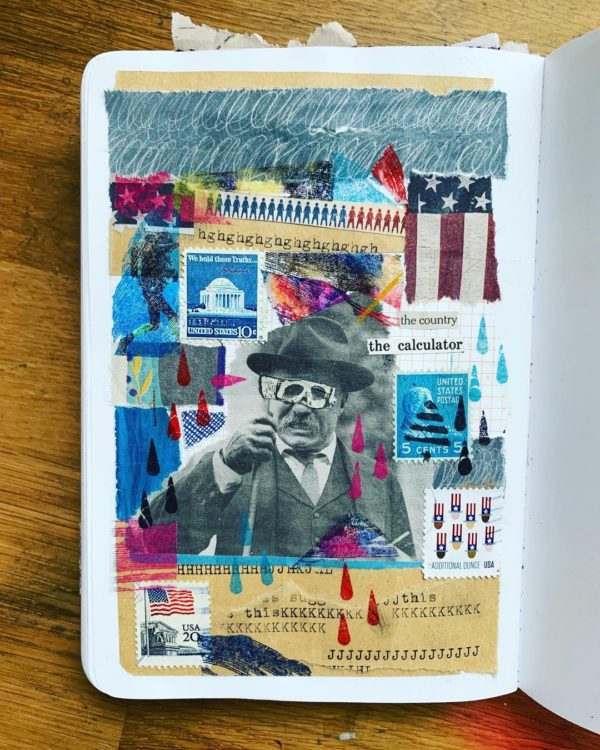
I'm usually good at avoiding doomscrolling and the Pavlovian pull and release of refreshing Twitter (ever discover how at that place's very rarely annihilation refreshing most refreshing?), just the election has destroyed nearly of my willpower. I've been busying my hands with The Cube and soothing my brain with the calm of collage, especially "ugly" ones like this one:
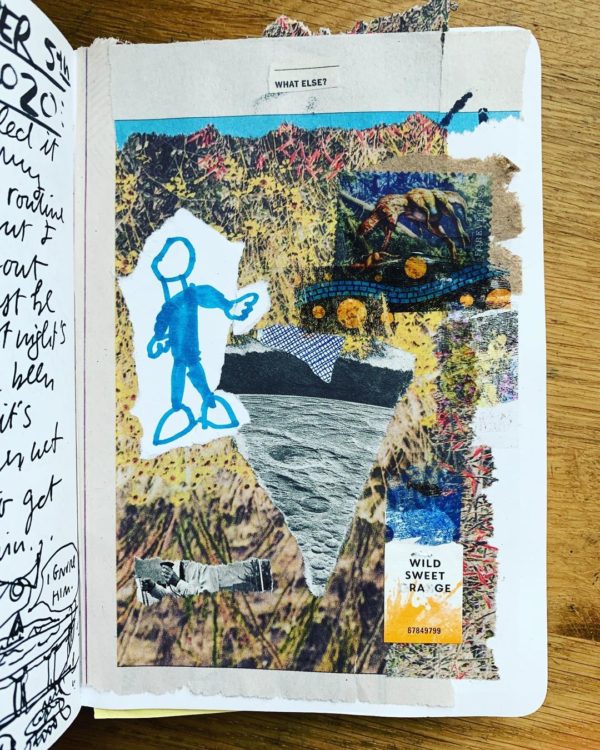
Some kind souls on Twitter said, "How do you consider this to be ugly?" Theproduction might not end up ugly, but theprocess is my try to make ugly or "bad" art, which I think is frequently much more fun and more than helpful than trying to make "good" art. ("Every fourth dimension we make a affair, it'southward a tiny triumph.")
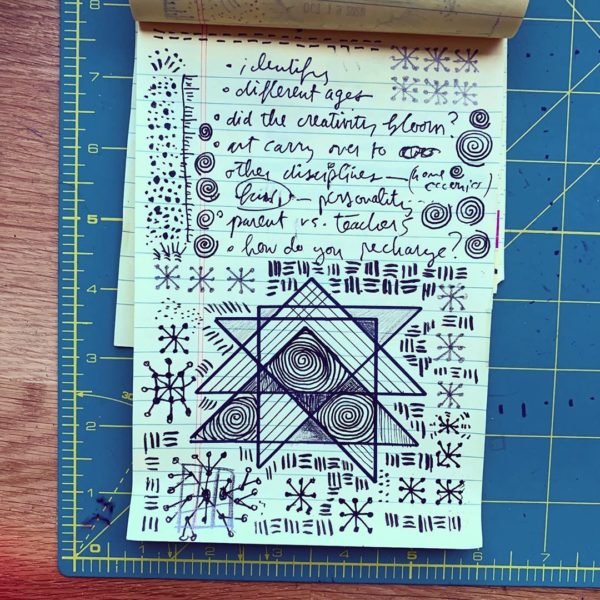
I've also been doing a lot of doodling on notepads. (In addition to all my notebooks, I keep 1 of these little legal pads on my desk for random notes.) Drawing is something to do and information technology is role of a cure and when you draw the world becomes a niggling fleck more cute. (If yous need some guidance, try a blind profile cartoon or my friend Wendy MacNaughton'due south iv drawing exercises to assistance with a hard twenty-four hours.)
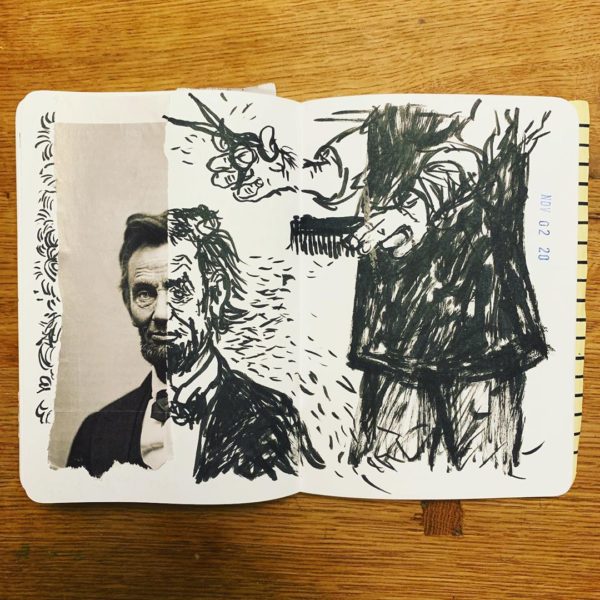
Here I've combined collageand drawing: I ripped a film of Abe Lincoln in half, pasted 1 one-half in my notebook, and every bit I was copying the second half, got the idea to make his hair shaggy… and then add a hairdresser? Who knows where these images come from…
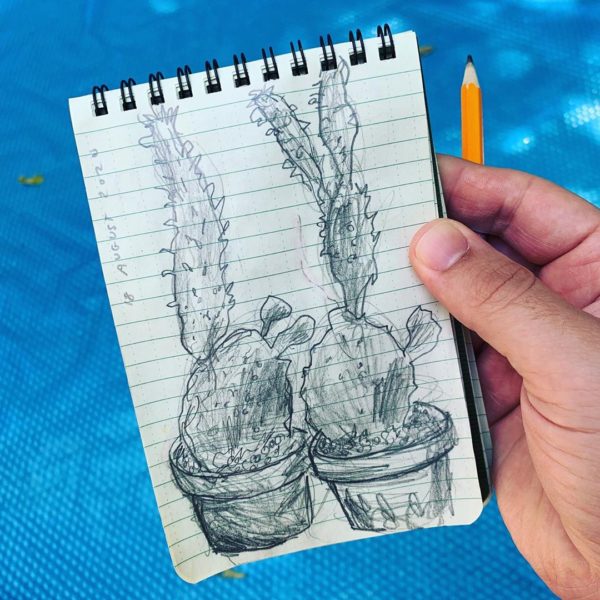
I was feeling angry and despondent yesterday, and I drew these two cactus plants on our back porch and immediately felt a picayune bit better. (Cartoon is office of a cure.)
In this video, John Light-green talks near drawing and productivity and thinking nigh time and why he'south attempting to depict 170,000 circles. My friend @craghead, ane of my favorite drawers, had a great response:
I beloved that he talks about drawing as more than than representing – as a process, as discovery, as a battery recharger…. My married woman says to me – "Go draw something" and then I draw a leaf or a synth or something and I fell ameliorate. Even drawing Trump helps. We are so lucky to have drawing.
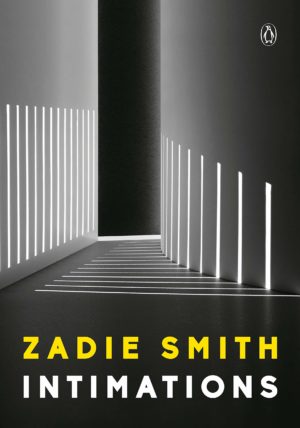 There's an essay in Zadie Smith's Intimationscalled "Something To Do," in which she thinks most why she writes. She comes around to this very simple truth: "It's something to do."
Of the pandemic and lockdown, Smith writes, "The rest of u.s. accept been suddenly confronted with the perennial problem of artists: fourth dimension, and what to do with it… At that place is no groovy deviation between novels and banana bread. They are both simply something to do."
On a contempo episode of Call Your Girlfriend, even so, Smith says she discovered that writing was more than a hobby — Can you imagine? Being Zadie Smith and notwithstanding thinking of writing every bit a hobby? — it's something she needs to do to stay alive.
I, too, am grateful to take something to practice, whether it'due south making a zine or drawing a cactus or writing this blog. Like Smith, I am non past my nature an activist, and then, as she puts it: "I simply practise the thing I can do." The work in forepart of me.
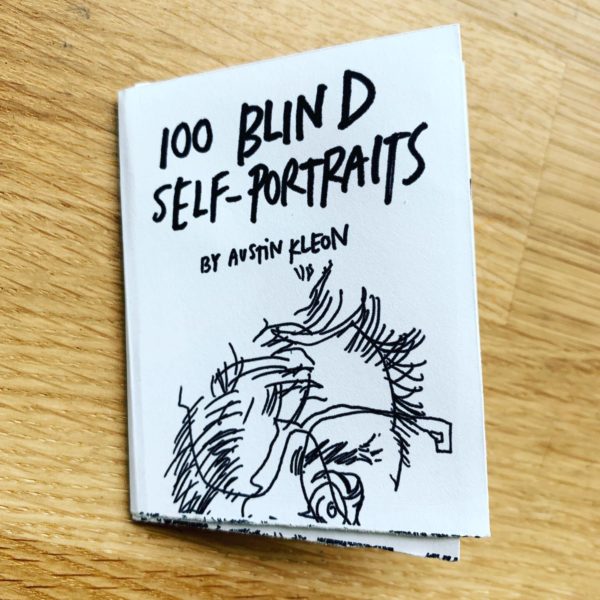
My blind profile drawing project I began in February striking 100 drawings, so I fabricated a zine out of them. (Yous can see them all in higher resolution on Instagram.) My friend Wendy MacNaughton has a blind drawing exercise in this weekend's NYTimes: "How to See, in Four Minutes."
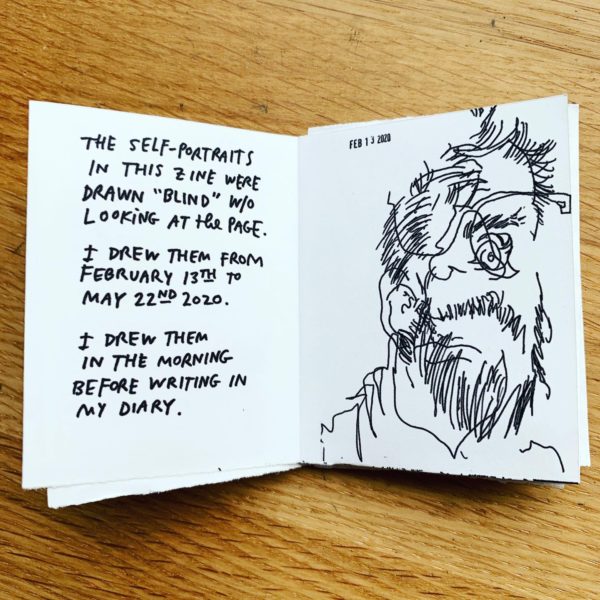
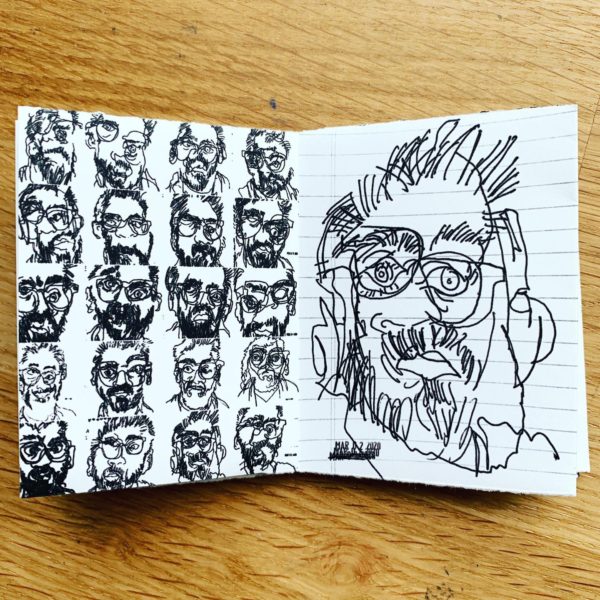
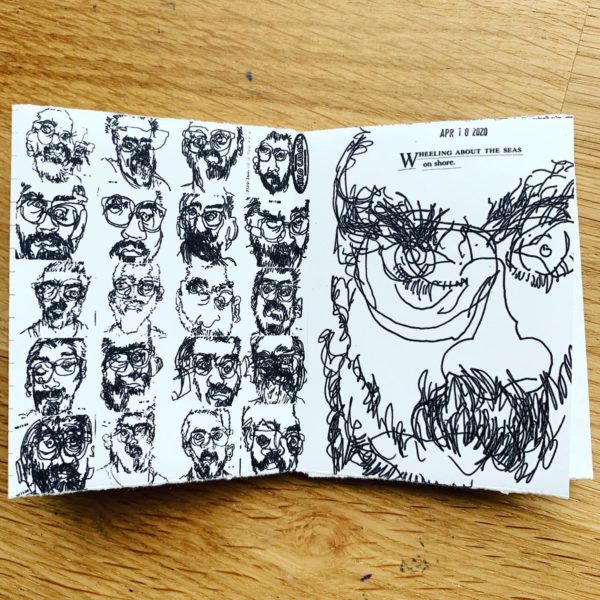
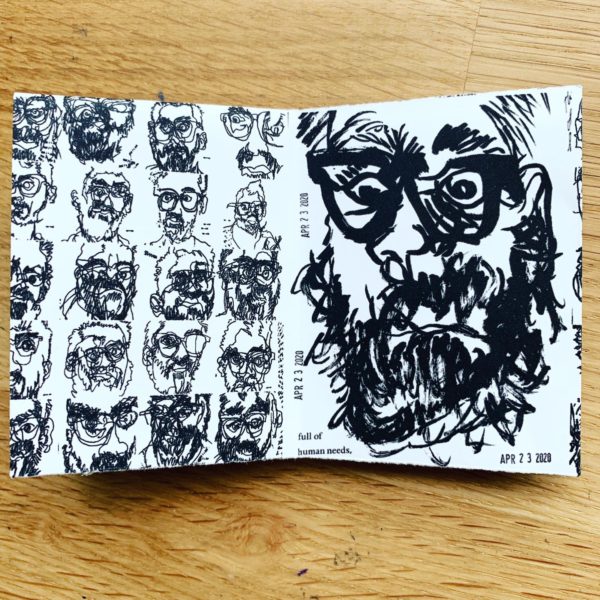
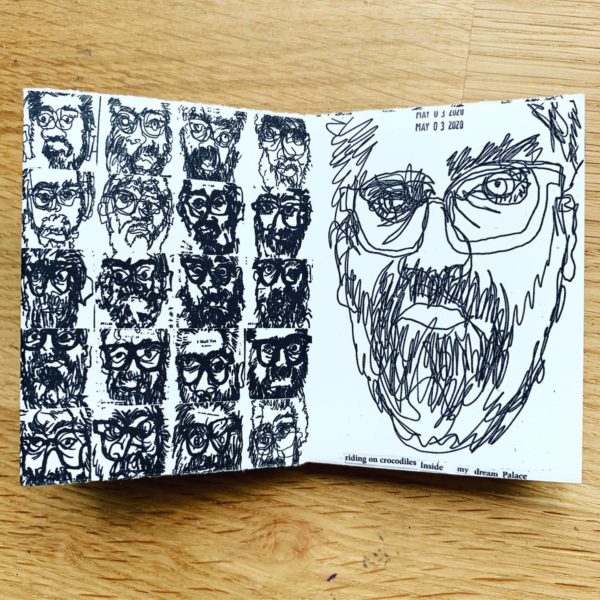
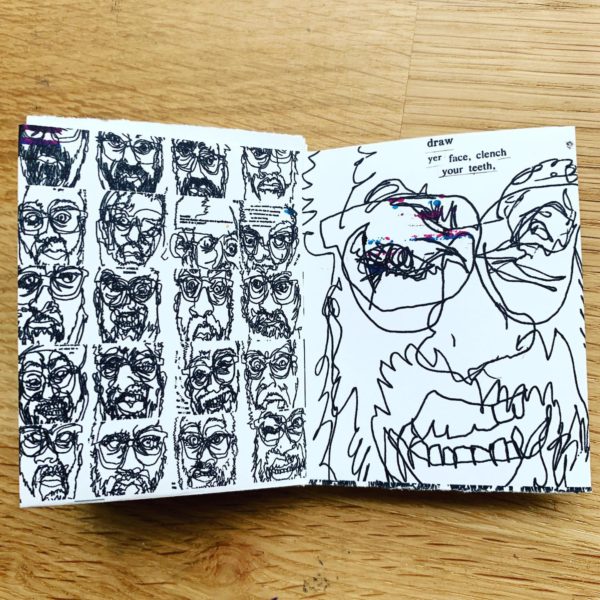
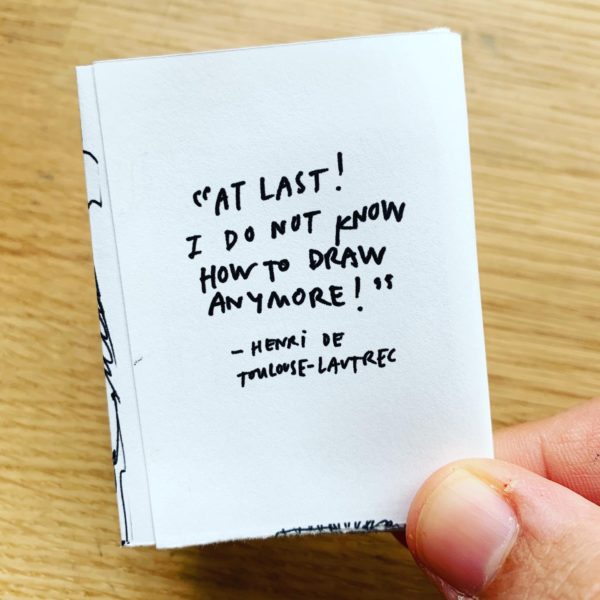
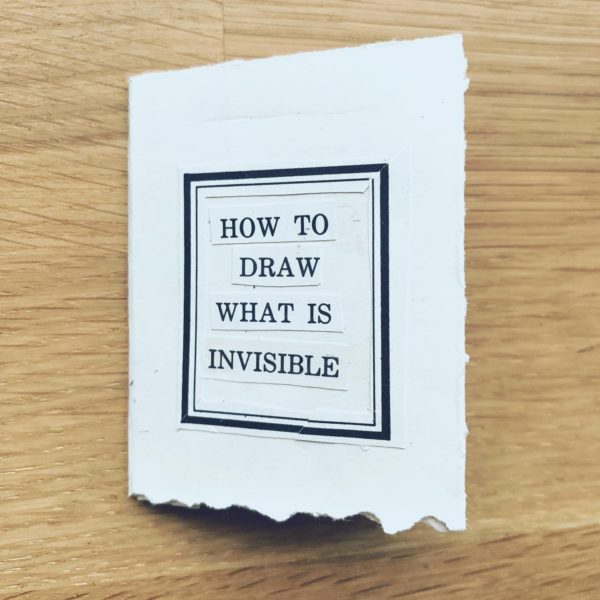
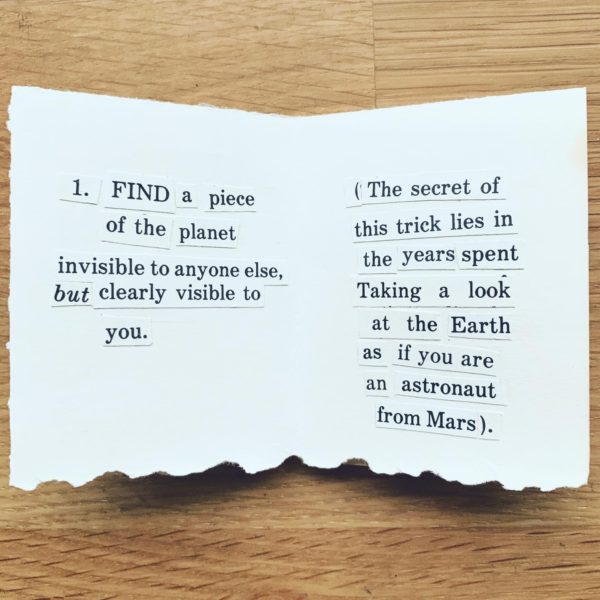
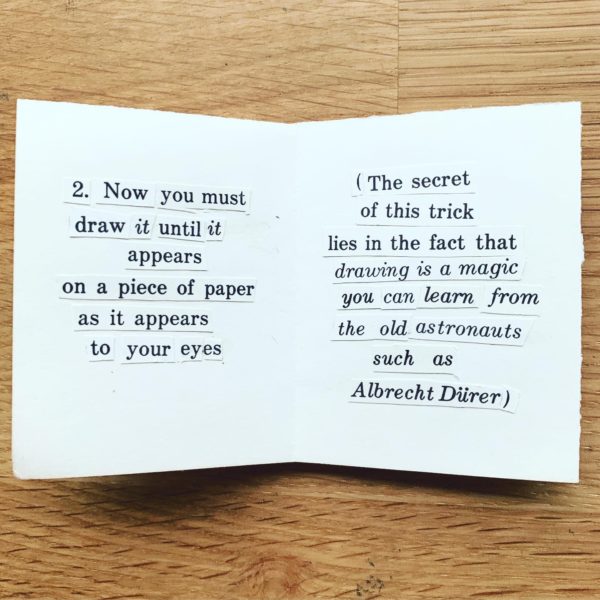
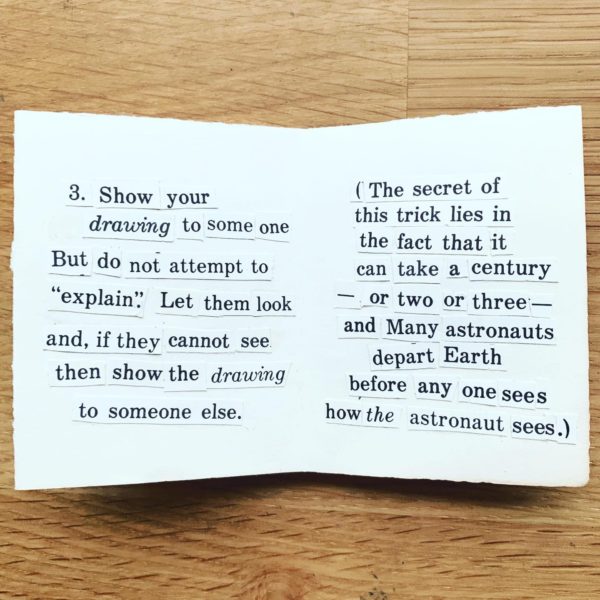
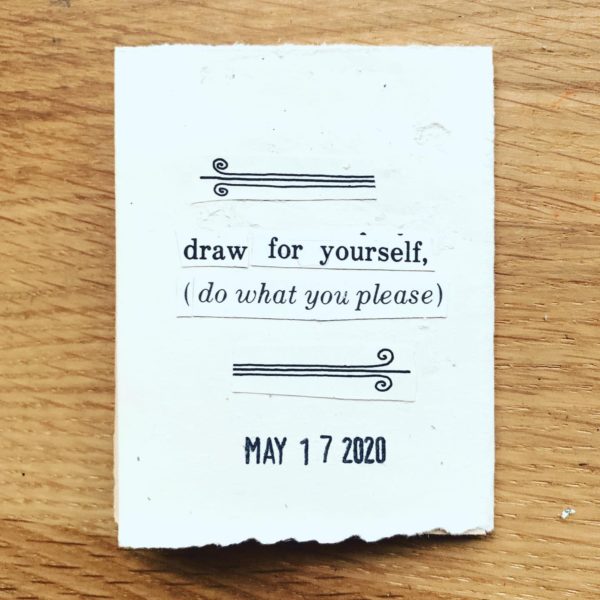
The text of this zine is cut out of the book How to Entertain With Your Pocket Calculator.
After I posted it yesterday, a few readers mentioned that it reminded them of Antoine de Saint-Exupéry'sThe Little Prince:
Here is my secret. It'due south quite uncomplicated: One sees clearly simply with the eye. Anything essential is invisible to the eyes.
The original French hung on a sign in Fred Rogers' role: "Fifty'essentiel est invisible pour les yeux."
When I was making the zine, I was singing Kate Bush:
I found a book on how to be invisible
Take a pinch of keyhole
And fold yourself up
Yous cut along a dotted line
You call back inside out
And y'all're invisible
Filed under: zines
Source: https://austinkleon.com/tag/drawing/

ارسال یک نظر for "Austin Kleon Draw the Art You Want to See"